Here is a reminder and more information on what promises to be a fantastic occasion in DC later this month.
Paul Jernberg, who founded the Magnificat Institute, is the composer of the music for the Mass for Blessed Karl that will premiere at this conference, told me:
The idea for this new composition, and for this conference, began with my "coincidental" meeting with the great-grandson of Blessed Karl (aka Charles 1 of Austria - the last emperor of the Austro-Hungarian Empire) a couple of years ago. The more I read about him and his wife, Zita, the more I was inspired by their radiant model of great leadership - characterized not by the desire for power but by the pursuit of wisdom and a faithful, self-sacrificial love for his people.
This is the second of two posts featuring meditations on frescoes painted by Fra Angelico on the walls of the cells at San Marco monastery in Fiesole, near Florence, by Br John Paul Puschautz, a Dominican of the Western Province in the US. Last time, we featured his meditation on the Annunciation. This week it is the Mocking of Christ
John Paul has just completed his STL, and his thesis title was "Visio Divina with the Art of Fra Angelico as Mental Pilgrimage: A Way of Beauty and Perfection." It is a scholarly development of a method of prayer analogous to lectio divina that uses sacred art for meditation rather than scriptural passages.
As I mentioned last time, contact Br John Paul through opwest.org if you want to publish his thesis. If it was published as a book I would buy it and promote it.
Two video interviews and an article about his philosophy of sacred music, recently published in the National Catholic Register.
I am delighted to share with you two hours of interviews with Sir James MacMillan, master composer and conductor, about how creating beautiful music can save culture from the ashes of modernism. One is by myself and the other by Margarita Mooney Clayton. Aside from being one of the greatest living composers and conductors of classical music, Sir James is a Catholic whose faith informs all his work. As you will see he is a deep thinker who communicates clearly the nature of the creative process when one seeks to create beauty to bring Glory to God.
Further, the reflections of my wife, Margarita Mooney Clayton on music and silence in the light of these interviews were published, recently in The National Catholic Register!
In June 2024, Margarita and I each sat down with MacMillan in the studios of Princeton Theological Seminary. He was leading master classes for composers of choral music in an event jointly sponsored by Peter Carter’s Catholic Sacred Music Project and the Scala Foundation, whose mission is to make authentic beauty accessible to wide audiences, a cause that MacMillan shares. Another major sponsor was the Benedict XVI Institute.
Here is my interview:
And, here is Margarita's:
In addition to the two full-length interviews, we are delighted to share clips from each of the interviews on these topics:
MacMillan's statement that “the war against silence is a war against ourselves and against our interior life” rang true because I see many turning to thoughtless political activism to fill their interior void.
Finally, some music! Here is a beautiful performance, in the presence of the composer, of Sir James's Give Me Justice in the chapel of Princeton Theological Seminary at the event. The conductor is Tim McDonnell of the Catholic Sacred Music Project:
This is the first of two posts featuring meditations on frescoes painted by Fra Angelico on the walls of the cells at San Marco monastery in Fiesole, near Florence, by Br John Paul Puschautz, who is a Dominican of the Western Province in the US.
The first is the Annunciation. John Paul has just completed his STL, and his thesis title was "Visio Divina with the Art of Fra Angelico as Mental Pilgrimage: A Way of Beauty and Perfection." It is a scholarly development of a method of prayer analogous to lectio divina that uses sacred art for meditation rather than scriptural passages.
I don't know if any book publishers are reading this, but it strikes me that his thesis would be excellent material for a book. Certainly, I would buy it and promote it if it was published! You can contact him through opwest.org.
Thank you, Br Pushautz, I learned a lot from your presentation.
In the year 1303, a Paduan money-lender named Enrico Scrovegni commissioned the painter Giotto to cover the whole interior of his family’s chapel with frescoes. The program, which required two years of work to complete, contains almost forty scenes of the Lives of Christ and the Virgin Mary, plus a large Last Judgment on the back wall, a series of monochromes of the Virtues and Vices, and a blue vault with stars. The cycle also includes the traditional account of the Virgin’s conception as given in the Protoevangelium of St James, an apocryphal Gospel of the mid-2nd century which is the first source for the names of Her parents, Joachim, whose feast is kept today, and Anne, whose feast is on July 26th. Here I have abbreviated the text, which is taken from the first five chapters, and slightly modified the translation.
In the histories of the twelve tribes of Israel was Joachim, a man rich exceedingly; and he brought his offerings double, saying, “All the people shall have of my superabundance, and there shall be the offering to the Lord for forgiveness as a propitiation for me.” For the great day of the Lord was at hand, and the sons of Israel were bringing their offerings. And there stood over against him Rubim, saying, “It is not meet for you to bring your offerings first, because you have not made an offspring in Israel.” ...
The Expulsion of Joachim from the Temple
And Joachim was exceedingly grieved, and did not come into the presence of his wife; but he retired to the desert, and there pitched his tent, and fasted forty days and forty nights, saying to himself, “I will not go down either for food or for drink until the Lord my God shall look upon me, and prayer shall be my food and drink.”
Joachim Among the Shepherds in the Desert
And his wife Anna mourned in two mournings, and lamented in two lamentations, saying: I shall bewail my widowhood; I shall bewail my childlessness. ... And she saw a laurel, and sat under it, and prayed to the Lord, saying, “O God of our fathers, bless me and hear my prayer, as You blessed the womb of Sarah, and gave her a son Isaac.” ... And, behold, an angel of the Lord stood by, saying, “Anna, Anna, the Lord has heard your prayer, and you shall conceive, and shall bring forth; and your seed shall be spoken of in all the world.” And Anna said, “As the Lord my God lives, if I beget either male or female, I will bring it as a gift to the Lord my God; and it shall minister to Him in holy things all the days of its life.”
The Annunciation to Anne
And, behold, two angels came, saying to her, “Behold, Joachim your husband is coming with his flocks.” For an angel of the Lord went down to him, saying, “Joachim, Joachim, the Lord God has heard your prayer. Go down hence; for, behold, your wife Anna shall conceive.”
The Dream of Joachim. (The Protoevangelium does not explicitly state that it was in a dream that the Angel spoke to him, as recounted above.)
And Joachim went down and called his shepherds, saying, “Bring me hither ten she-lambs without spot or blemish, and they shall be for the Lord my God; and bring me twelve tender calves, and they shall be for the priests and the elders; and a hundred goats for all the people.” And, behold, Joachim came with his flocks; and Anna stood by the gate, and saw Joachim coming, and she ran and hung upon his neck, saying, “Now I know that the Lord God has blessed me exceedingly; for, behold the widow no longer a widow, and I the childless shall conceive.” And Joachim rested the first day in his house.
The Meeting of Ss Joachim and Anne at the Golden Gate
And on the following day he brought his offerings, saying in himself, “If the Lord God has been rendered gracious to me, the plate on the priest’s forehead will make it manifest to me.” And Joachim brought his offerings, and observed attentively the priest’s plate when he went up to the altar of the Lord, and he saw no sin in himself. And Joachim said, “Now I know that the Lord has been gracious unto me, and has remitted all my sins.” And he went down from the temple of the Lord justified, and departed to his own house.
Joachim’s Offering
And her months were fulfilled, and in the ninth month Anna gave birth. And she said to the midwife, “What have I brought forth?” And she said, “A girl.” And Anna said, “My soul has been magnified this day.” ... And the days having been fulfilled, Anna was purified, and gave the breast to the child, and called her name Mary.
The Gloria in excelsis, on which we have been meditating (here, here, and here), is sometimes contrasted with the Te Deum, since every time the former is said or sung at Mass the latter is said or sung in the Divine Office. But one difference between the two hymns is that the much shorter Greater Doxology places a greater emphasis on divine glory than its longer cousin. Whereas the Te Deum mentions glory twice (once in reference to God and once in reference to ourselves), the Gloria in excelsis uses “glory” or “glorify” four times:
Gloria in excelsis Deo (Glory to God in the highest)
Glorificámus te (We glorify Thee)
Gratias ágimus tibi propter magnam gloriam tuam (We thank Thee on account of Thy great glory)
Tu solus Altíssimus, Jesu Christe, cum Sancto Spíritu in gloria Dei Patris (Thou alone, O Jesus Christ, art most high, with the Holy Ghost in the glory of God the Father)
Let us look at each in turn.
“Glory to God in the Highest”
As we noted earlier, Gloria in excelsis Deo can either mean that all glory belongs to God or that all glory should go to God. Either way, the divine has a special purchase on glory. In the Old Testament, the “glory of the LORD” (kavod YHWH) was a palpable presence in places such as Mount Sinai, the Tabernacle, and the Temple. It could also be terrifying, as when the glory of the Lord appeared as a burning fire atop Mount Sinai.
The Hebrew noun kavod is derived from the word for “weight” and is etymologically related to “armament.” Kavod has genuine heft, worth, and value, which is why it naturally elicits praise. But as the sight of the Lord’s glory on Mount Sinai attests, it is also associated with brightness or light. In liturgical Latin (especially the Roman orations), kavod in general is translated as gloria while the luminous aspect of glory is translated as claritas. [1]
Kavod YHWH on Mount Sinai
“We Glorify Thee”
According to the Gloria in excelsis, we glorify God. And yet if all glory is already His, how is it possible for us to give Him any more? On the other hand, the human glorification of God lies at the very heart of the Mass, for as St. Thomas Aquinas teaches, “The end of divine worship is that man may give glory to God and submit to Him in mind and body.” [2] Moreover, in addition to describing divine glory, the Bible speaks of Israel, do-gooders, and even the sun, the moon, the stars, and a woman’s head of hair as possessing some glory. [3]
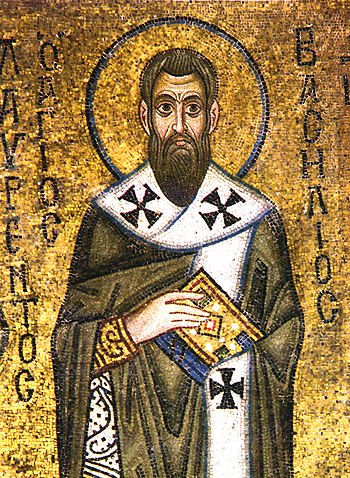
For St. Basil the Great, “glory is nothing other than the recounting of the wonders that belong” to someone or something. [4] Creatures do this naturally and without words; sunlight, for example, is “the glory of the sun.” [5] Rational creatures, on the other hand, glorify God by choice. The only way that humans glorify the Father, Son, and Holy Spirit is by “expounding their wonders as best we can.” [6] And yet paradoxically, there is a way in which even this “exposition” is a gift from God, a participation in or sharing of divine glory. “He that glorieth, let him glory in the Lord,” St. Paul writes. “For not he who commendeth himself is approved, but he whom God commendeth.” [7]
“We thank Thee on Account of Thy Great Glory”
St. Paul’s statement may also shed light on the next verse of the Angelic Hymn. I find it rather curious that of all the things for which to thank God, His “great glory” is singled out, as opposed to His creating us, blessing us, or redeeming us.
Perhaps the reason is twofold. First, God’s glory is a triumph for us that fills us with joy. When my favorite team wins the championship, I give glory to them, but I also feel elevated and better off as a result. Indeed, insofar as I am a loyal fan, I share some of their glory, which is why I proudly festoon myself or my front yard or my pickup with their team colors and images of their mascots.
And I feel this way even if my team doesn’t know me from Adam: they don’t know that I scream at the TV when the ref makes a bad call; they don’t know that I defend their honor at sports bars; they don’t even know that I exist. But imagine—and this brings us to the second reason—if your favorite team not only knew of you, but loved you singularly, and that when they scored the winning point they looked for you in the stands and, when they found you, blew you a kiss and victoriously pumped a fist in the air. Such is the way that Christians feel about their God, for the Father gave the Son glory and the Son shared that glory with His adopted sons through the Holy Spirit. [8] When God approves of us, Saint Paul writes, He commends us; He compliments us, He congratulates us.
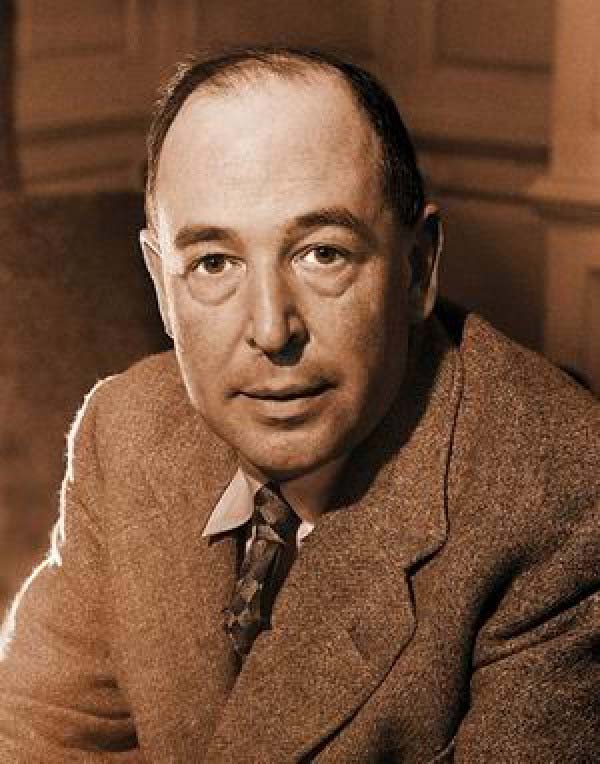
In a magnificent essay entitled “The Weight of Glory,” C.S. Lewis describes the promise of our glorification at the end of time as “almost incredible” because it implies that God actually likes us, that despite our sins He will not simply tolerate our presence but deliriously approve of us:
The promise of glory is the promise, almost incredible and only possible by the work of Christ, that some of us, that any of us who really chooses, shall actually survive that examination, shall find approval, shall please God. To please God...to be a real ingredient in the divine happiness...to be loved by God, not merely pitied, but delighted in as an artist delights in his work or a father in a son—it seems impossible, a weight or burden of glory which our thoughts can hardly sustain. But so it is.
Yes, we are certainly grateful for God’s great glory.
Or, at least we used to be. I wonder if there is a certain contemporary prejudice against the concept of glory; perhaps it strikes the modern ear as outdated or jingoistic or even fascist. This prejudice does not exist worldwide. In modern Hebrew, “Good fortune!” (Mazel Tov) is said in response to good events and “All the glory!” (Kol HaKavod) in response to good deeds. When a baby is born, Israelis say Mazel Tov; but when someone knits a baby an adorable pair of mittens, they say Kol HaKavod.
The original ICEL translation of the Mass seems to have had an allergy to glory. It omitted “we glorify Thee” altogether, and it deleted “great” from “on account of Thy great glory.” (It also inexplicably replaced “we give Thee thanks” with “we praise Thee.”) Fortunately, the 2011 translation corrected these errors. That said, the 1970 Missal mentions glory far less than does the historical Roman Mass: the Gloria in excelsis is not used so often, and all the Lesser Doxologies (the Gloria Patri) were removed.
“In the Glory of God the Father”
Jesus Christ and the Holy Spirit, we declare, are in the glory of God the Father. By making this confession the final verse, the Angelic hymn begins and ends with the glory of God the Father. It also tightly summarizes one of the great themes of the Gospel according to Saint John: the glorification that takes place within the Holy Trinity. Jesus Christ’s entire mission on earth is to glorify the Father by establishing a Church, and the Father in turn glorifies the Son. And it does not take much brainpower to conclude that the Holy Spirit glorifies both and is glorified by both.
St. Basil the Great
Or perhaps it does. St. Basil battled a group of heretics called the Pneumatomachians or “Spirit-fighters” who argued that glory should not be given to the Holy Spirit on the grounds that He was not a Divine Person. Basil easily refuted their argument by noting all the places in the Scriptures that creatures are given glory and then asking them:
While so many are being glorified, do you wish the Spirit alone to be without glory? “The dispensation of the Spirit,” Scripture says, “comes in glory.” How, then, is He unworthy of being glorified? According to the Psalmist, great is the glory of the just, but according to you, the glory of the Spirit is nothing. How, then, is there not an evident danger that from such words they bring inevitable sins from themselves? If the man who is saved by works of righteousness glorifies even those who fear the Lord, he would not defraud the Spirit of the glory that is owed to Him. [9]
The Gloria in excelsis is one of the ways that we do not defraud the Spirit of the glory that is owed Him.
Music
The Greater Doxology, then, exults in God’s great glory. But this theme is vulnerable to the musical setting that accompanies it. The right settings, such as the chants from the Liber Usualis or the works of many classical composers, reinforce and enhance the hymn’s meaning while other compositions, especially those of a more recent vintage, undermine or subvert it.
My argument is this. Whether it is the kavod YHWH that God alone possesses or the “weight of glory” that Christian disciples bear, glory is “heavy”—it may be a cause of joy, but it always has gravitas. Therefore, any music that lacks gravitas should not be used with a hymn about glory. Robert Cardinal Sarah has speculated that “the massive loss of enthusiasm for attendance at the Sunday Mass” can in part be attributed to celebrations that are “wholly cheerful in spirit.” [10] I am inclined to agree with His Eminence, but even if he is not right, we can still safely say that a musical setting for the Gloria that is wholly cheerful in spirit—e.g., it is cheesy or sentimental or perfect for an upbeat liturgical dance—is missing the point. Using sappy music to illuminate the LORD’s kavod is like having a Dixieland jazz band perform Puccini’s “Vincerò” with lots of comical glissandos from the slide trombone. Man can find a better way to glorify God.
Notes
[1] Sr. Mary Pierre Ellebracht, Remarks on the Vocabulary of the Ancient Orations in the Missale Romanum (Nijmegen: Dekker & Van de Vegt, 1963), 24.
[2] Finis autem divini cultus est ut homo Deo det gloriam, et ei se subiiciat mente et corpore. ST II-II.93.respondeo.
Following up on a post from Tuesday, here are some more photographs of a very beautiful altar missal which is owned by the church of St John Cantius in Chicago, Illinois. It was printed by the Pustet firm, based in Regensburg, Germany, in 1863, and is remarkable not only for the very large number of images, but the fact that they are in color. (I own a two-volume lectionary which was part of the same print run, and which has many of the same images, but all in black-and-white.) Several of these pictures appeared on his Substack a few days Tradition and Sanity a few days ago; I thank him for letting us reproduce them here. (There are definitely enough of these to make more than one post.)
These are predominantly taken from the Proper of the Saints, and most of the images are illuminated letters at the beginning of the Introits. They are arranged here in liturgical order, except for the first, which is that of today’s feast of the Assumption.
The introduction to the proper of the Saints.
St Andrew the Apostle, November 30
St Thomas the Apostle, December 21
Pope St Marcellus I, January 16
Ss Marius, Martha, Audifax and Abbacum, a group of martyrs celebrated on January 19.
St Agnes, January 21
The Purification, February 2
St Titus, the disciple of St Paul, February 6
St Matthias the Apostle, February 24
The Forty Martyrs, a group of soldiers martyred at Sebaste in Armenia, March 10
St Joseph, March 19
The Annunciation, March 25
The feast of the Seven Sorrows of the Virgin Mary on Passion Friday
Pope St Leo I, April 11
Pope St Anicetus, April 17
St Mark the Evangelist, April 25
Saint Monica, May 4
The Apparition of St Michael, May 8
Ss Peter and Paul, June 29
The Visitation, July 2
St Vincent de Paul, July 19
St James the Apostle, July 25
St Anne, July 26
St Ignatius of Loyola, July 31
The Beheading of St John the Baptist, August 29
The Birth of the Virgin, September 8
The Holy Name of Mary, formerly celebrated on the Sunday within the octave of the Birth of the Virgin, later fixed to September 12.



.JPG)


.JPG)


.JPG)
.JPG)
.JPG)


.JPG)

.JPG)


.JPG)


.JPG)
.JPG)




